

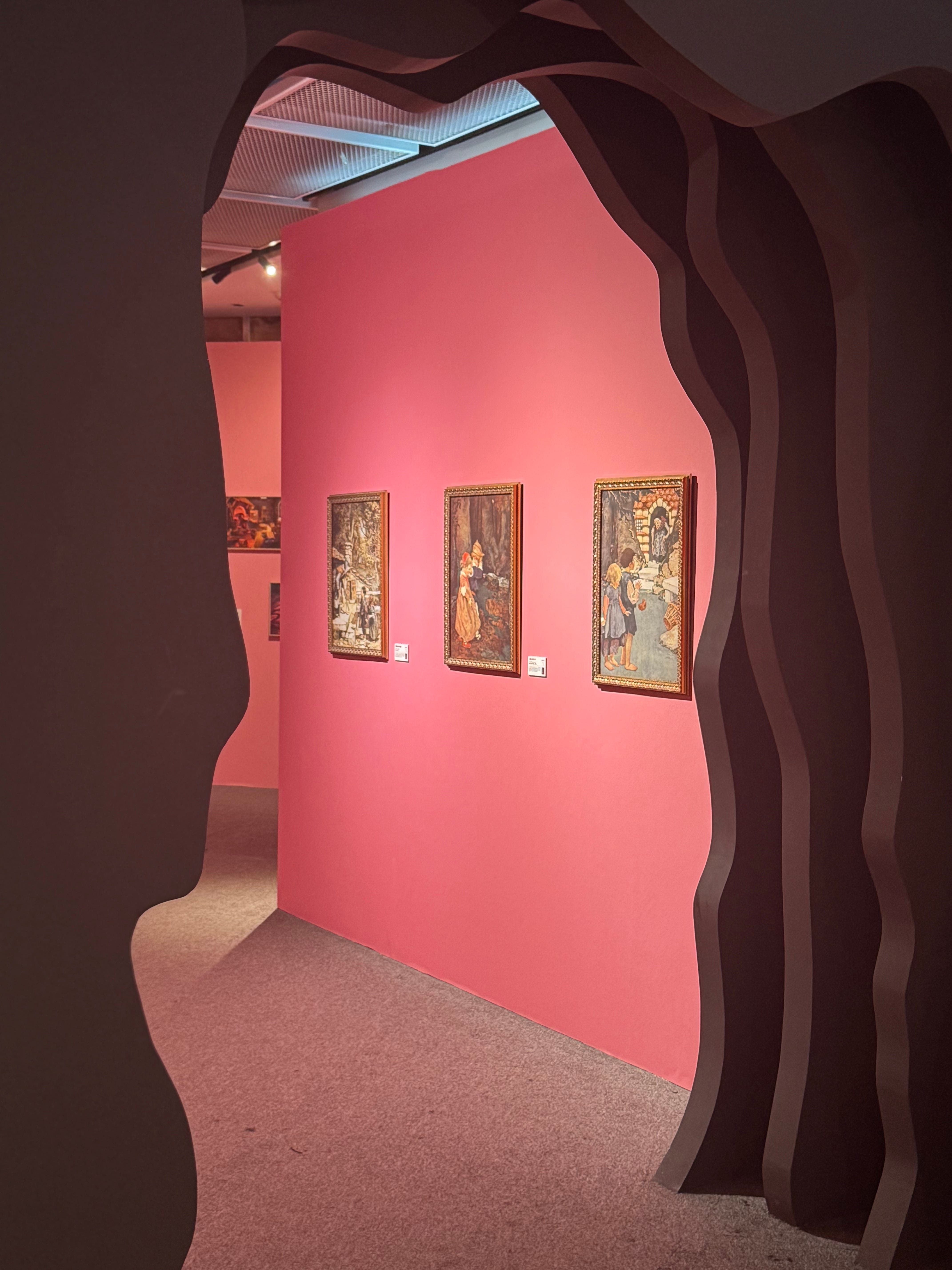
Rose-colored light flowed through the air like honey. I stepped onto the plush red carpet, believing I was walking into a fairy tale dipped in gold.
“Some fairy tales were never born to end happily.”
The guide’s voice, however, pierced the colored soap bubble like a needle. The light stayed gentle enough to break a heart. Yet at the end of the carpet, a fissure seemed to open, inviting me to witness a trap dressed in its finest.
Stories, after all, always begin to warp in their brightest passages.
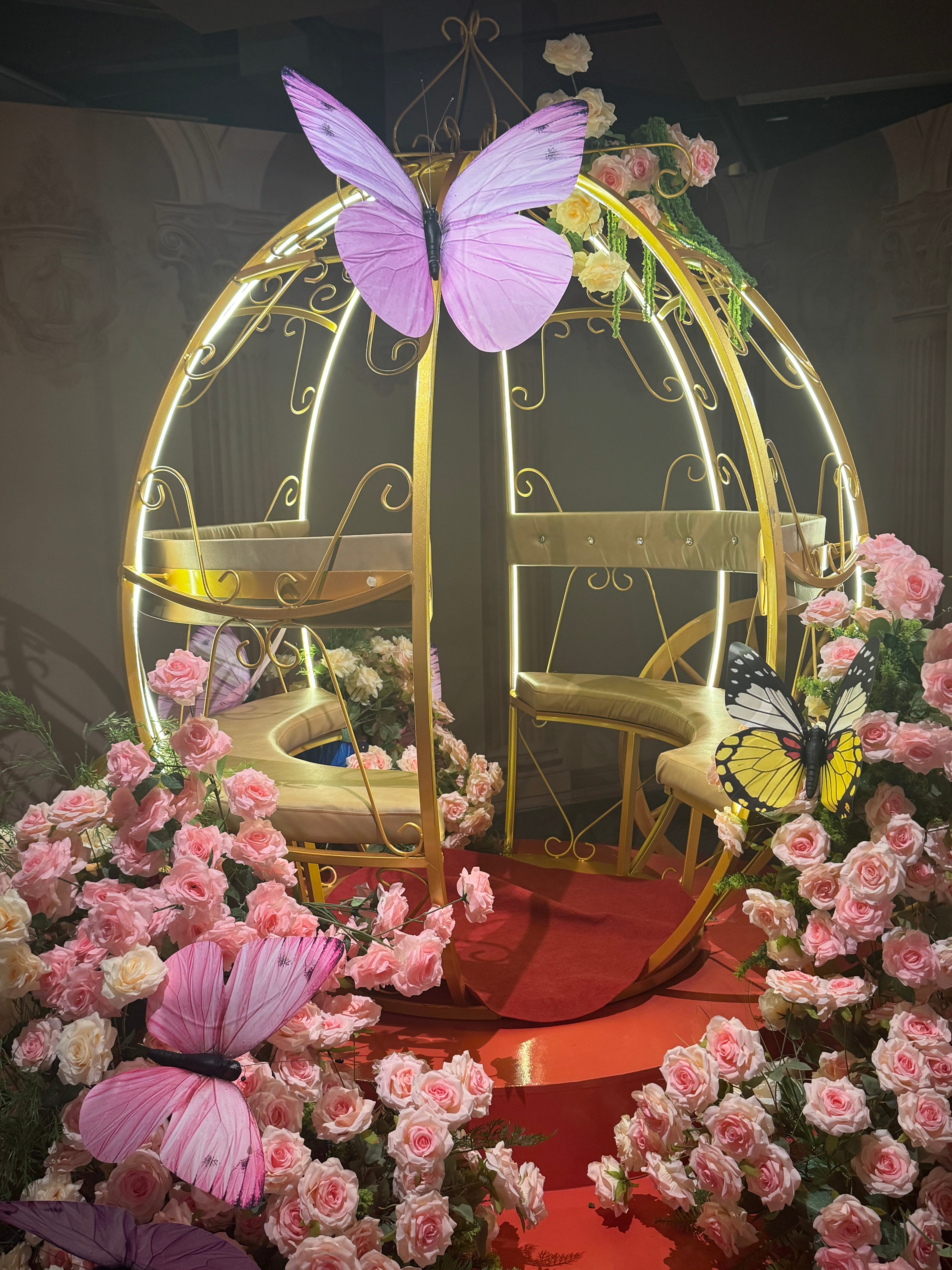
Roses burned along the frame of the carriage, every petal screaming as it opened. A butterfly rested at the top, warm gold caught in the veins of its wings, holding a place in the wind for the princess who had not yet arrived.
In the fairy-tale formula passed down to us:
Fairy godmother + pumpkin carriage = happiness
The equation was almost cruel in its simplicity. But if those magical variables were erased—if there were no fairy yeast to make rescue rise, no golden carriage to carry her away—would she remain forever trapped in the angle between cinders and the clock?
I stood at the border between reality and fantasy. The glass slipper refracted an illusory promise. The pumpkin carriage opened its empty arms. The fragrance of flowers was too lavish, trying to seal every question-shaped crack with sugar.
She deserved to be saved. But her beauty had to be enchanted before it could be seen.
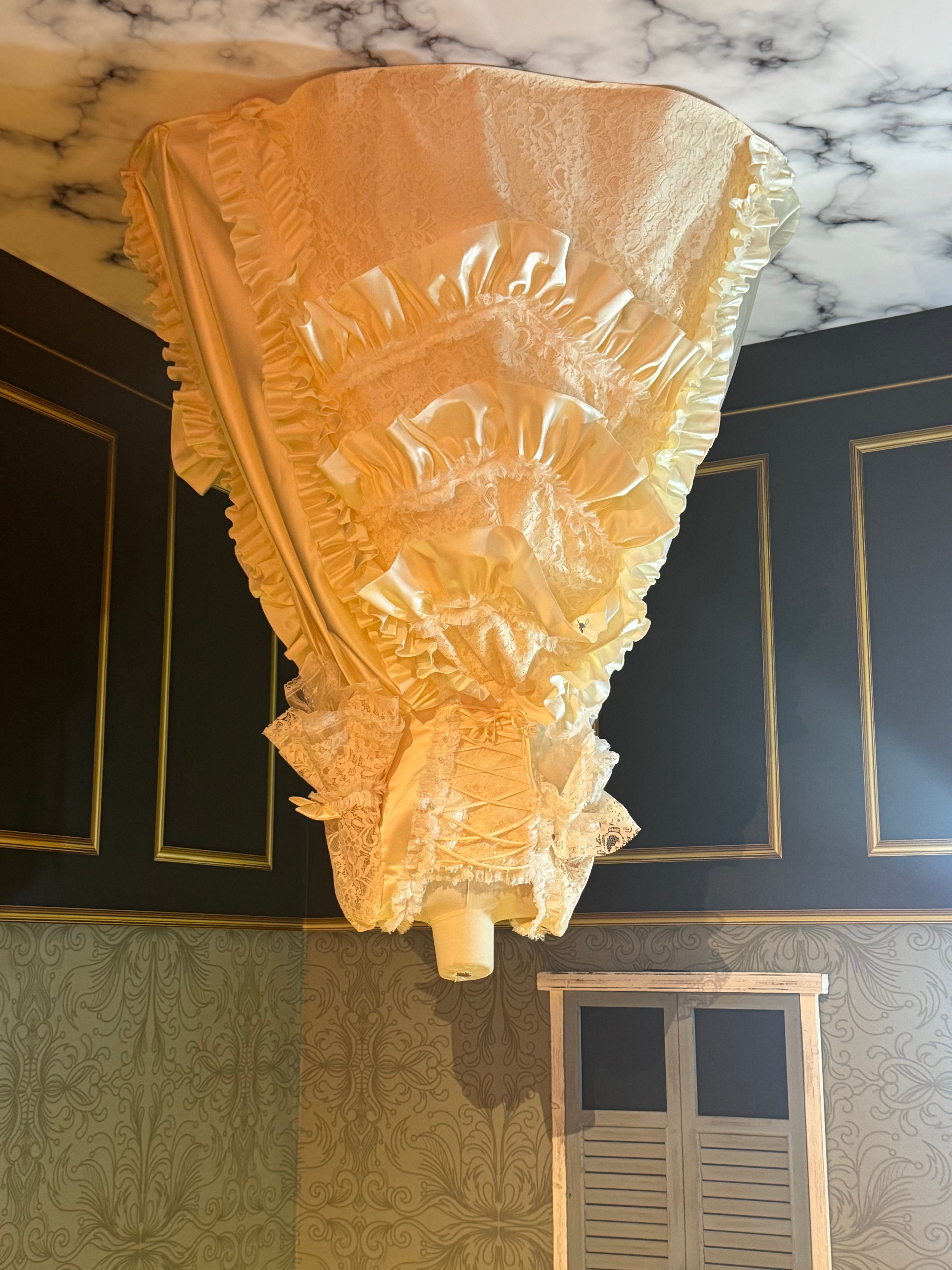
The wedding dress hung upside down from the ceiling, a white waterfall against the light, sending every blessing back toward its source. Layer after layer of fabric folded upward, soft to the point of extravagance, yet pulling a thin line of suffocation taut through the air.
The wooden door stood stubbornly upright, like an enchanted night watchman. In this inverted world, it had become the only normal anomaly.
Fairy tales always write the wedding dress as the first chapter of happiness. But who can promise the next page will not be the prelude to tragedy?
If the gown were turned the right way up, how many thread ends would we find stitched shut? How many patches hidden in haste? Were all those promised “forevers” like the inverted hem—already letting every promise leak away?
Perhaps the dress was never what had been placed the wrong way around. Perhaps it was our belief that a beautiful beginning must lead to a happy ending.
When love has been facing the wrong direction from the start, which red carpet are we supposed to follow toward sunset?
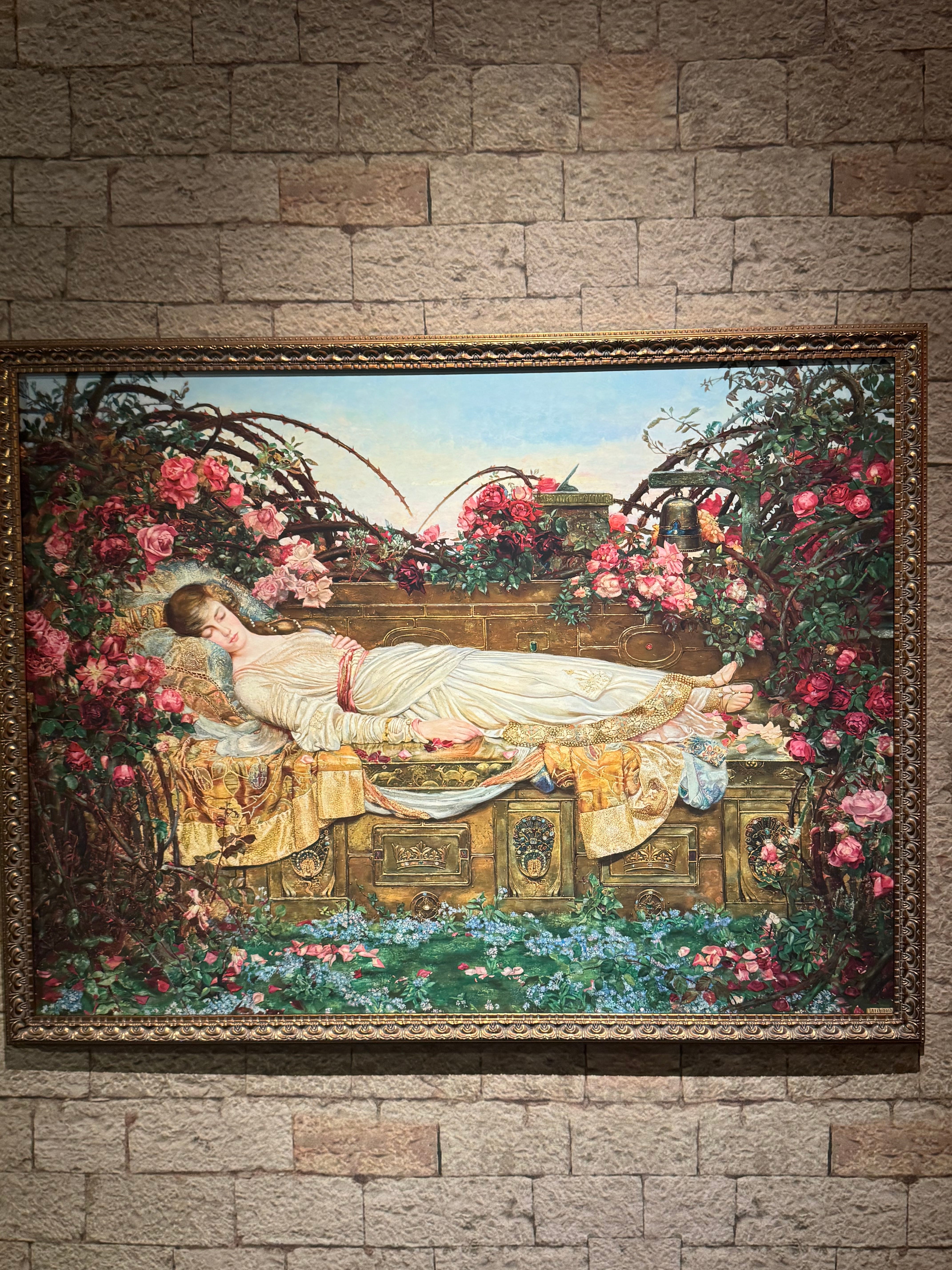
The thorns quietly wove themselves into a cage. Like loyal sentries, they held her in a tender captivity.
The roses were red enough to make me dizzy. Every spike had been tamed into carved edging. This carefully designed danger was so beautiful it made you forget to breathe.
Fairy tales always say it takes a prince’s kiss to rescue her.
But look at the slight lift at the corner of her mouth. Wasn’t this walled city of thorns also a refuge she had built with her own hands? It kept the clamorous world outside, leaving behind only a safe silence.
I, too, once practiced this elegant falling, swallowing every scream back into my chest. Outsiders saw only the still surface of the water. They never saw the twisted reefs underneath.
So I understood the stubbornness inside this stillness: between being protected and being bound, there is only the thickness of a petal.
And if a pair of lips truly insisted on making their way through the thorns, would she be grateful for the rescue, or whisper softly:
“Why not let me sleep until the last rose has withered?”
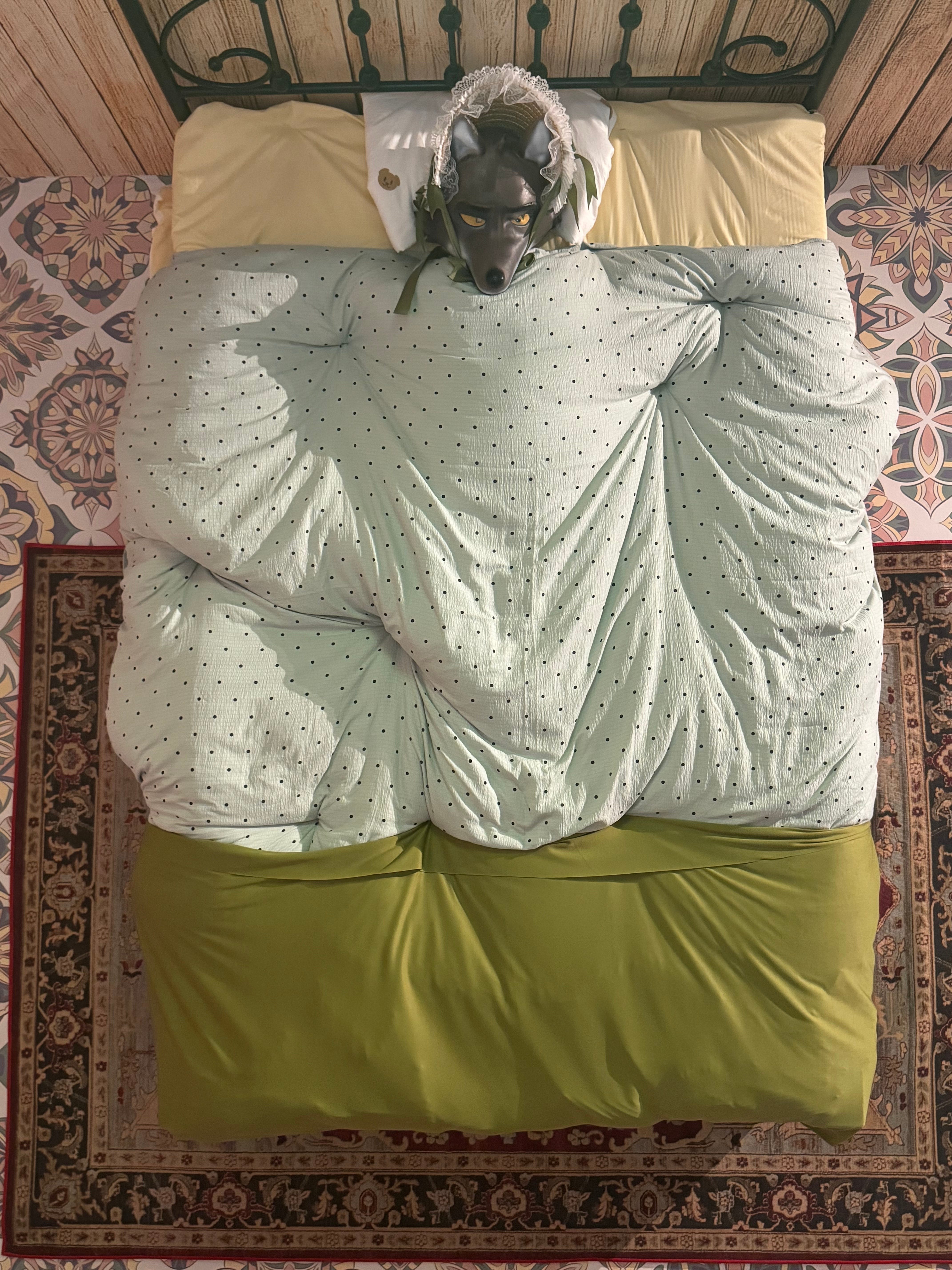
Beneath the floral bedsheet, perfect murderous intent lay in wait. Under a lace-trimmed cap ironed neatly into place, a rigid smile rehearsed a grandmother’s tenderness.
Only the amber eyes betrayed the secret.
In the original tale, there was no rescue. The grandmother’s warnings and Little Red Riding Hood’s trust both disappeared into the abyss of the down comforter.
We were taught from childhood: kindness earns a fairy-tale ending, and tears summon a hero. But the warmth beneath the covers proved that waiting was the most exquisite deception of all.
“Come into my arms, darling.”
The words hung in the air. Were they a sweet temptation, or a piece of performance art carefully staged by despair?
And when the story reaches this scene, if a familiar knock sounds at the door once more, will you still be holding a wicker basket filled with innocence—or will you turn around and discover that you, too, have grown the same fangs?
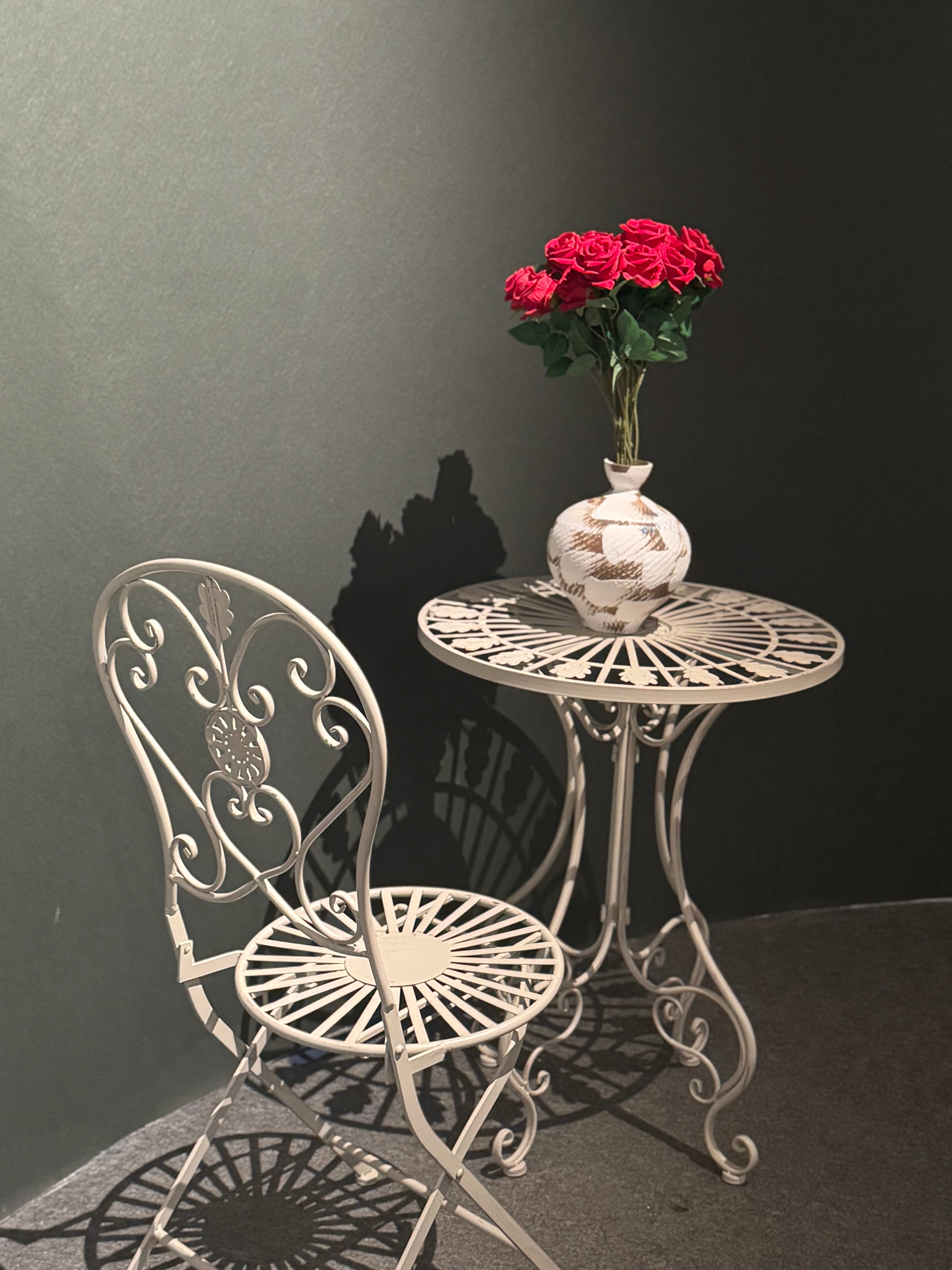
That chair stood empty, like a love letter that would never find its addressee. Red roses burned in the cold light, dressing the dinner’s solitary dance in evening wear.
This was the cruelest lesson fairy tales had to offer: some waiting is never answered by a knock at the door, and some tables were never meant to need a smile from the seat across.
It was a grand confrontation with the void.
The shadows on the wall began to improvise, using exaggerated outlines to tell the romantic epic of a single life. Those chair backs cut apart by shadow seemed to declare: solitude is not an unfinished thing. It is another form of wholeness.
So the china I had set out for imagined tea parties, and those afternoons when I raised a glass to the air, were fairy-tale endings I had written for myself.
They did not need to be happy. They were allowed to be painful, so long as they had stayed in my life with sincerity.

As I stepped out of the gallery, the light narrowed to a crack in the doorway, like childhood being folded for the last time.
I stood at the threshold, inside that crack of light, suddenly unsure:
Had magic abandoned me, or had I betrayed magic?
But the lies I had learned to see through had once shimmered honestly beneath the moon.
I used to fall asleep with my head resting on Cinderella’s tears, believing that a kiss among the thorns could truly wake the sleeping. Now I knew the clock would strike twelve, and the pumpkin carriage would reveal its true form. But why did even sweetness have to lose its power?
Growing up is a cruel gift.
It taught me to see which way every thorn pointed, yet confiscated the delighted shiver that once came with being pricked.
The little girl who had believed too easily had now been placed inside a glass case, beneath a label:
“Fragile. Handle with care.”
Yes, growing up means trading innocence for a dull ache. In the end, we all learn to cohabit with the truth.
But beside the pillow, there will always be a place kept for a fairy tale.
🌙 Why do fairy tales so often make love look like something that must be earned, awaited, or granted?
Long before we knew how to question them, they gave love a script: become beautiful enough to be seen, wait quietly enough to be chosen, and trust that rescue will arrive from outside.
Adulthood shows us the seams. Protection can become a cage. A beautiful beginning can still face the wrong direction. An empty chair does not make a life unfinished.
But unlearning the script does not require us to destroy the magic. It means deciding which stories may stay beside the pillow—and which ones no longer get to tell us what love must cost.
What fairy tale first taught you what love was supposed to look like—and what did adulthood make you unlearn?
You can leave it here quietly.
I read every comment.
Xiaobian, I loved the way you let us keep the magic without asking us to keep believing the old lessons hidden inside it. That distinction at the end felt important to me. Growing up doesn’t have to mean becoming cynical about fairy tales, only learning that love doesn’t require us to wait in a tower, sleep behind thorns, or become beautiful enough to be chosen. And that empty chair was such a beautiful part of this… a life can be whole before anyone takes the seat across from us. 🫶